
THP Interview
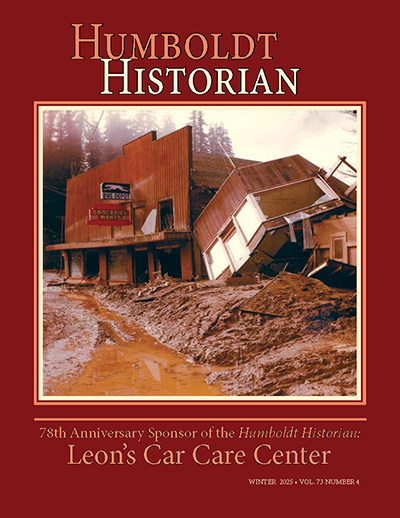
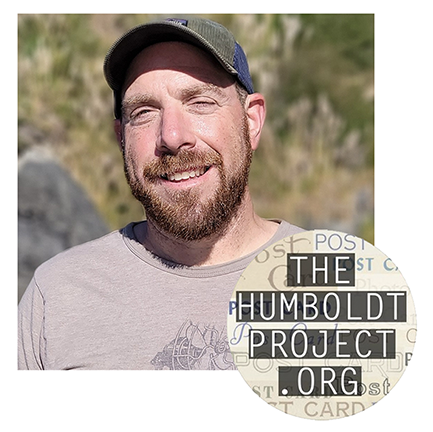
Aurhor Ray Raphael continues his interviewing local historians series with Steve Lazar, the founder of The Humboldt Project.
Meet Your Local Historian:
Steve Lazar
by Ray Raphael
In this continuing feature, Ray Raphael asks our Humboldt historians what excites and drives them.
RAY: Let’s start at the beginning. How did you get so into postcards?
STEVE: I guess I’ve always been a collector. I collected baseball cards when I was a kid, and comic books for a little while. Then CDs and tapes. I got into the Grateful Dead, and I had a bootleg collection. That’s how I got my chops archiving, writing the set lists and doing all the cataloging.
Then, in my early thirties, I was taking classes at College of the Redwoods through Bill Hole’s Historic Preservation and Restoration Technology program. I wasn’t sure what I was going to do with it, but I thought it could help me with my job as a planner. Bill is extremely charismatic when it comes to historic preservation. He has a way of getting under your skin, and I am a victim of that. I started going to the Historical Society and the Humboldt Room, looking through primary sources in their collections. I was used to buying things on eBay or Amazon, so I searched for my own copy of Irvine’s 1917 History of Humboldt County or Elliott’s History that I could cozy up with at home. I dialed in “Humboldt County history” as a search term, and some of what it served up was postcards. It was so random—and really cool. Holy cow, that’s the Arcata Plaza! That’s the Eureka Inn! Just fifty cents or a dollar, I’ll get one of these. It wasn’t long before I was completely embroiled in collecting them.
RAY: When you go on eBay, how do you find what you want?
STEVE: It’s like fishing. I have a bunch of fishing poles in the water with different search terms—redwoods, logging, place names in Humboldt or western Siskiyou County. I check those poles a few times a week to I see if I got any nibbles. When I see a result, I look and see if it’s something that looks unfamiliar and interesting. I can get really excited. A shot of the coastline near Punta Gorda— “I’ve never seen this one before. I know Laura Cooskey will be interested! I can’t wait to show this to Thomas Dunklin!”
RAY: And what about the accompanying message? If the message is directly linked to the postcard, it’s a unique caption to the photo. Together, they tell a story.
STEVE: They certainly do. A postcard is impregnated with history. Somebody produced it. Somebody acquired it, often wrote a message, and sent it. Somebody else received it and kept it, and it has survived for 50 or 100 years.
RAY: How far back do postcards go?
STEVE: They don’t go back to the dawn of time. In this country, the first “postal cards,” also called “stamped cards,” were manufactured and distributed in 1873 by the U.S. Postal Service. They did not require a stamp because postage was included in the purchase of the card.

NO. 03972 Government issue 'postal card,' 1889. Note the address is simply "Blue Lake."
The current postcard format we are all familiar with can be traced back to the following key changes in US postal law: the reduction of postage from 2¢ to 1¢ for mailing privately produced cards (1898), allowing private cards to bear the label of “POST CARD” (1901), and the introduction of cards with a “Divided Back,” allowing space for messages next to the mailing address (1907).
Collectively, these developments helped usher in the “Golden Age of Postcards”. During this time, affordable cameras were becoming available to the public. People would buy a camera, take their own pictures, and send them off to be developed: “Hey, can you make some prints for me? And some on postcards?” These were pre-manufactured card stock with photo emulsion on one side. Professional photographers also began printing cards of their own. They were pretty shrewd: “What’s going to sell? What will be of interest to the postcard-buying public?”
Commercially produced postcards focused on subjects seen as signs of progress or affluence: civic buildings, hospitals, schools, churches. In Eureka, for instance, we have the Carson mansion, Fort Humboldt, Carnegie Library, and the Eureka Inn. And of course we have an abundance of cards featuring redwoods, logging, and so on. Postcards by amateur photographers are harder to find. Let’s say there’s a postcard of a family eating dinner or standing in front of their house—the auction listing will rarely include information to connect with one of my fishing lines.
RAY: Each postcard represents a discrete moment in history, and now you have ... how many in your collection? And how do you make sense of it all? How do you see the forest for the trees?
STEVE: After seventeen years of collecting, I have well over 10,000 cards. Currently 5,000 are scanned and roughly 2,000 images are up on my website, thehumboldtproject.org. At first, I was just fascinated by the scenes on the front of a postcard, and I loved to juxtapose them with other scenes. But eventually, after so many years of collecting, a taxonomy emerges— whether it’s the subject on the front of the card or the location or the era or the photographer or the means of production, photographic versus lithographic. Historical institutions generally fall prey to the locale and just place a postcard in that box. Virtually, I’ve been able to explode that tyranny. A card can be in ten boxes simultaneously, not just one. You can slice through the archive any which way.
I post cards on social media, Instagram and Facebook, almost every single day on the anniversary of the postmark. There’s a few just in the last week that are amazing stories in and of themselves. One was mailed from Ferndale on August 7th, 1908, likely an amateur photo. If the card didn’t have that postmark and the seller didn’t list it under “Ferndale,” it never would have made its way back to Humboldt County. It shows a bunch of young men consistently dressed, wearing hats and carrying rifles, and standing in formation. When I posted it online, a woman responded by identifying the location of the photo. I sent this to Laura Cooskey, and she added context.

NO. 03877 Real Photo Postcard - Camping at Laurel Glen, mailed in 1908. Location identified through Facebook.
LAURA COOSKEY: The lady who commented on Steve’s Facebook page was none other than Linda Smith Franklin, granddaughter of Mary Etter and Vernile Shinn, who hosted the campground there which they called “Laurel Glen.” I think the uniforms and military-style lineup showed nothing more than a militaristic style of the times, popular for boys to be groomed for soldiery. Maybe they felt the Great War brewing. The Boy Scouts were founded in 1908 in England, and by 1910 in the U.S., so maybe we were just a bit ahead of the times here in Humboldt!
You can see that they aren’t really uniforms, probably a suggestion from the leaders to wear overalls and hats and try to match—but one seems to be in a work apron, one in suspenders, all in differently-colored shirts and with their own hats. So, it wasn’t any organization well-funded enough to provide uniforms. Until the anti-war movement of the 1960s, it seems the military model for children and fraternal organizations was pretty widespread. Even the Girl Scouts and Brownies wore uniforms, caps, and sashes with rank and insignia.
RAY: Seems like social media is quite handy for crowd-sourcing historical expertise.
STEVE: If you’re not using social media, you hamstring your ability to tap into all the sources. Any good researcher would never want to do that. Here’s a card I posted on March 27th, sent from Garberville to the town of Mendocino. It’s chrome-era, made through color “Kodachrome” photography, and it shows a guy putting on a golf green in front of the Benbow Inn. The message invites recipients to “Come see us when you can,” and it’s signed by the owners, “Claudia & Art Stadler.” When I posted this on Facebook, some people who had worked there at that time revealed that they were paid to write these cards to former guests, forging signatures of the owners. This was not some one-off. The cards were mass produced to rustle up business.
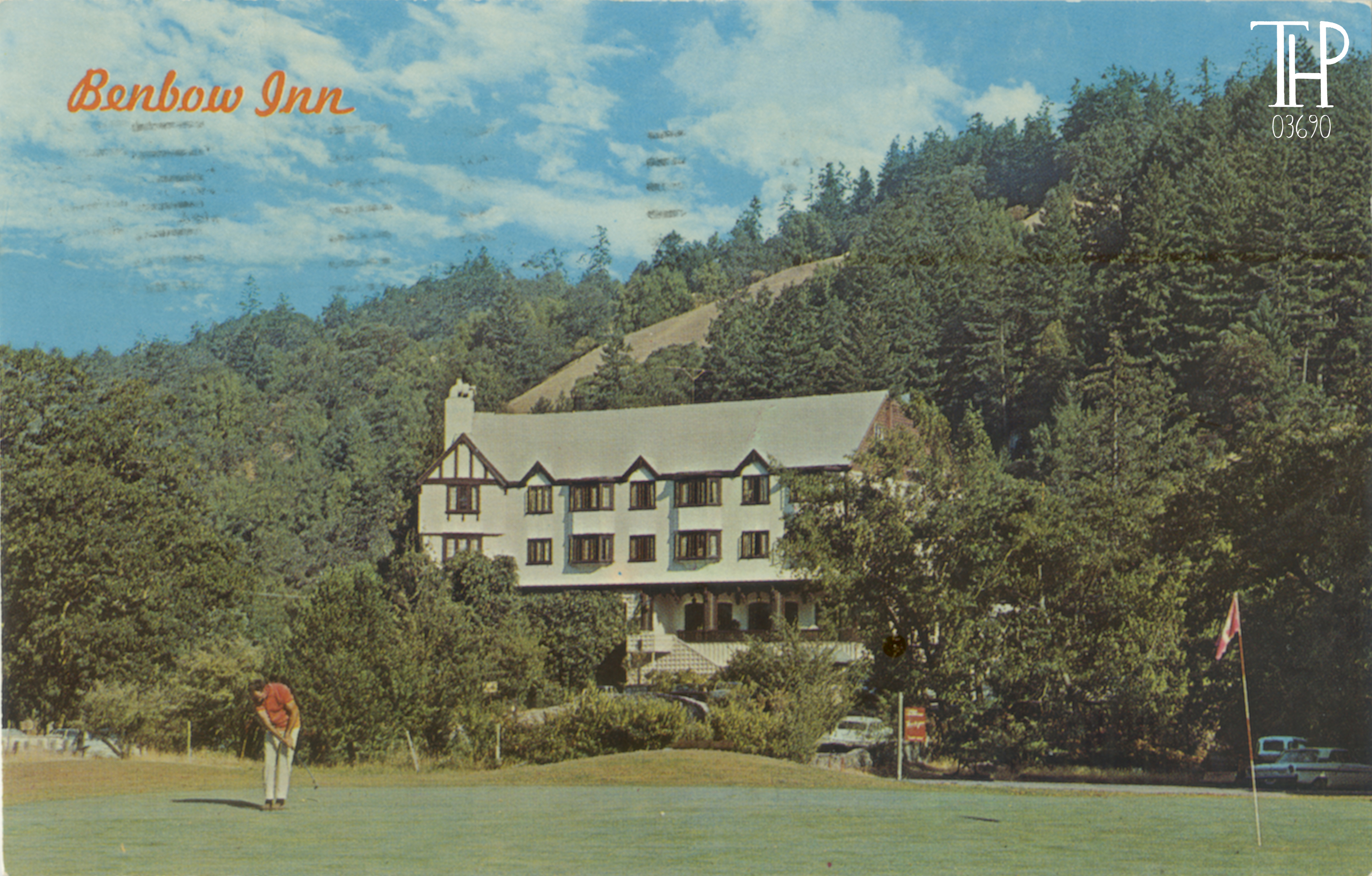
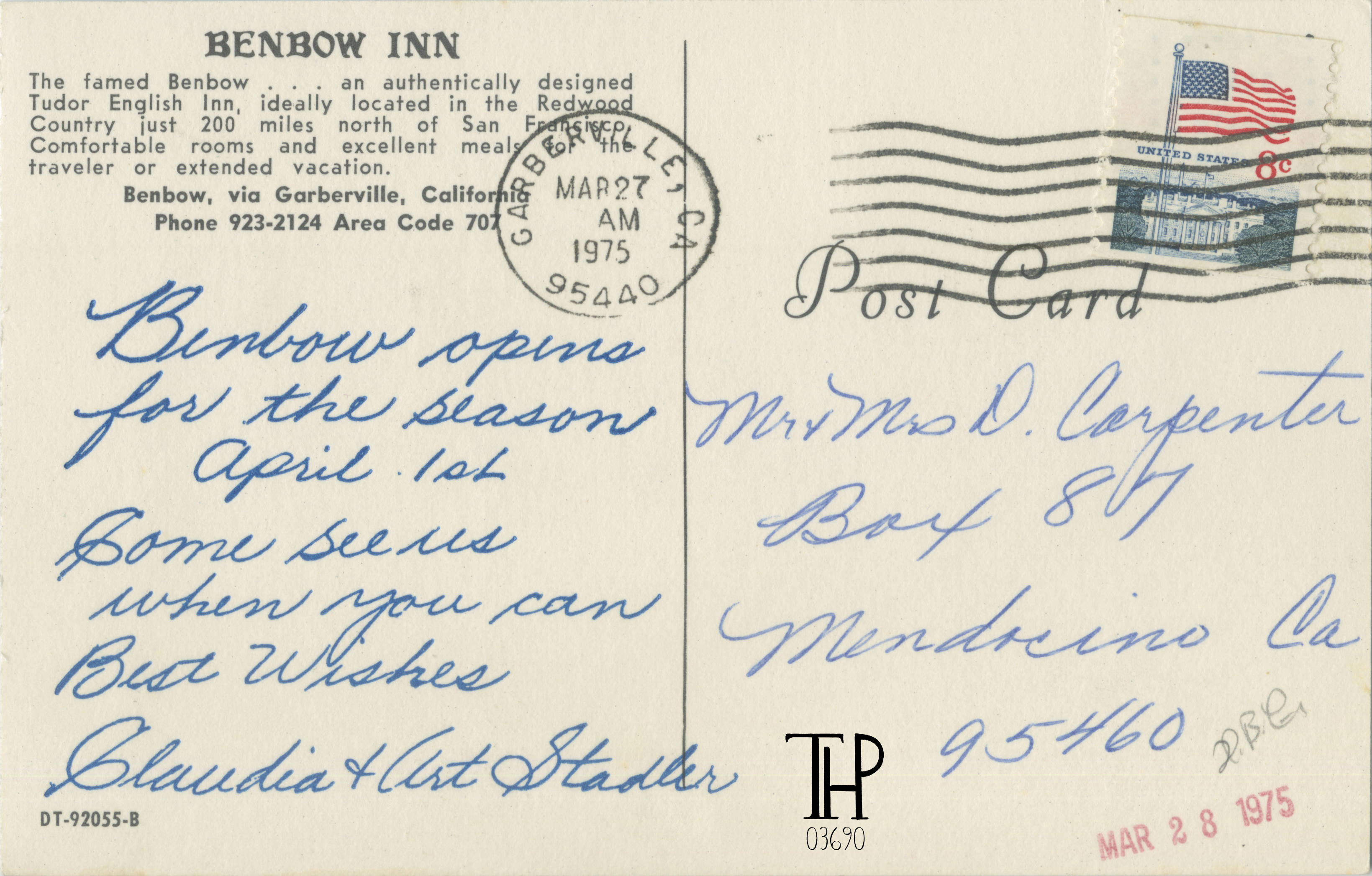
NO. 03690 Mailed from Garberville to Mendocino on March 27, 1975, showing one of the putting greens at Benbow; this part of the course's 9th hole was reconfigured following the completion of the freeway in 1969-70.
RAY: So what appears as just a snapshot in time can actually reveal wider historical events, the way things were done at that time.
STEVE: And it’s only through social media that you can put it in front of enough eyeballs to where somebody might come out of the woodwork and say, “Yeah, I used to work there and I had to write those postcards.”
RAY: Have you found many cards featuring the hinterlands, other than those showing redwoods or logging?


NO. 00323 From Oakland to Paris to Rome, 1904. The address fills one side; between 1898 and 1901, non-government cards had to be labeled "Private Mailing Card" to use the reduced rate (one cent).
STEVE: Not many, but some. For Capetown, just one. Petrolia, Honeydew, Fort Seward a few more, but still only a handful. I do have a fairly large collection from Orleans, and that’s pretty remote. Orleans is an example of a community that used postcards as promotion, revealing how the town views itself.
I was just up in Orleans for their Old-Timers Day, which was also Father’s Day. I brought postcards with me and gave out copies from the collection and talked to some of the older folks there. People were really amazed at the images. That’s where I want to take things with the collection, make it more than just a bunch of pictures, use it as a catalyst for people to have these conversations and to see what materializes out of that. There’s a lot of history still to be written, a wealth of everyday history that still needs to be captured, and postcards are great catalysts for stimulating conversation, recollecting and reminiscing. The images really help to get the juices flowing. They serve as focal points, getting people together to talk about their communities.
Sometimes I forget how desensitized I am to the images themselves, having lived with these things for almost twenty years now. Then suddenly I see somebody’s brain explode in front of me, because they’re looking at something they’ve never seen before. It’s a place they’re very familiar with, yet this is showing it in a light that’s completely foreign to them—the landscape changes that are evident in early photographs, or a building they never even knew existed.
Here’s a great example. I had dropped off some postcards at the Salmon River Outpost [general store where the Salmon flows into the Klamath River], and when I came back to restock, I overheard Joe, the proprietor, talking with a younger Native guy. Joe’s showing him this picture, and the guy says, “No way! I never knew there was a bridge over there!”
Early in my collecting, I met up with Cammille Layton, an old friend of mine who grew up in Happy Camp and had been living out in Orleans for many years. I wanted to show her a bunch of my Orleans area cards. There were some that I didn’t recognize, so I was looking for help to figure them out. A lot of the photographs were taken from a pretty high vantage point. They’re looking at Orleans from the east side of the Klamath River; looking across the river, Orleans is on the opposite bank. One was addressed to Mabel Reed, one of the two women who chronicled their time along the Klamath in the classic book, In the Land of the Grasshopper Song. When I showed Cammille this card, she says right away, “Oh, that’s from Big Rock. That’s definitely where it was taken. That would be the spot.” This was probably back in 2012, and at the time I just filed that name away in my brain.


NO. 01775 Klamath River, taken from Big Rock, mailed in early 1908 to Mabel Reed at Somes Bar.
Years later, I went backpacking in the Marble Mountains, and I was coming back through Orleans by myself looking at the scenery. For some reason, I suddenly thought, where is this “Big Rock?” So, I stopped at the Orleans market, walked in there, and looked to see if there was anybody I could talk to. Behind the register was this Indian fellow—someone from India, not a Native American. I tell him, “I’m looking for a place called Big Rock.” Well, a Karuk guy standing nearby hears that, and he says, “Oh, Big Rock. Are you looking for Big Rock?” I say “Yeah.” He rattles off a couple key details ending with “…look for a trail after Burn-out Turnout.”
I do that. I drive across the Klamath, using the instructions. I get to a place where I can see this faint, steep trail going up the hillside. I start following it and ascend the hill. It’s probably 300, 400 feet of elevation gain in a very short distance.
Then all of a sudden, I see massive rocks, these huge boulders. I think, “Wow, this is a crazy geologic formation! I don’t know what’s going on here.” Then I notice that the trail peters out to where I can walk out onto the top of one of the rocks—and there I am, looking across the river! That’s the vantage point! I had crossed the divide of 120 years. That was the culmination of a journey that started with a postcard I found on eBay fifteen years earlier. I never get tired of putting all those puzzle pieces together. It’s so precious when you can pull back the veil of time.

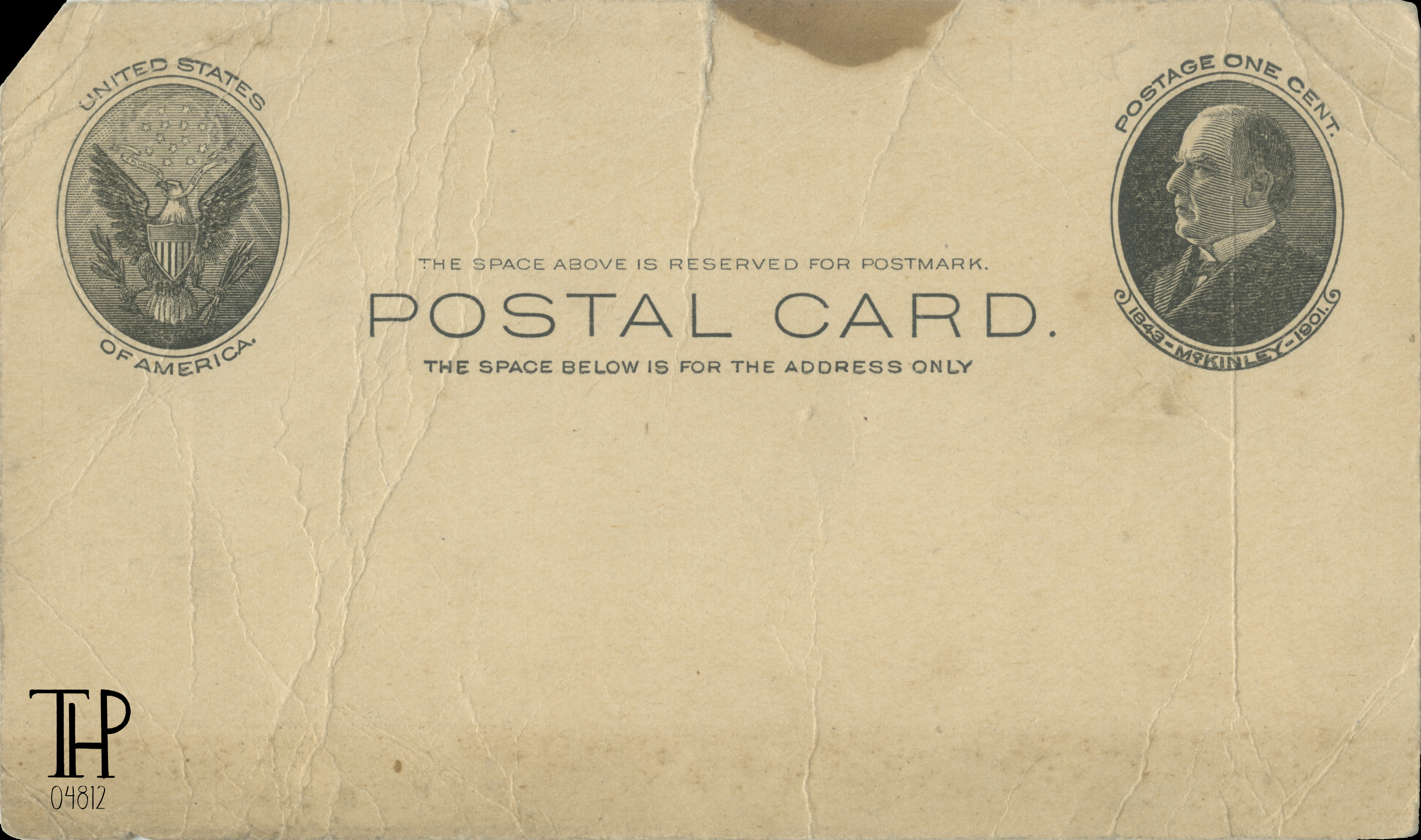
NO. 04812 This 1902 government-issued card is a “hybrid” format, a precursor of 100% private postcards. The front is a privately-printed photograph of Ferndale. On the back, there is a variant of the United States seal and a printed stamp commemorating the recent assassination of President McKinley.
Visit Steve Lazar's postcard collection at thehumboldtproject.org, or use a phone to scan the QR Code to take you there. Full-color scans of each card can be found on the website using the five-digit collection number. Check out The Humboldt Project (THP) on Instagram and Facebook too. The THP Instagram account was created in October 2022 and has nearly a thousand posts, featuring scans of cards from the collection, timed to the anniversary of their postmarks. The posts include transcriptions of the messages, commentary, and complementary cards, images, contextual, and anecdotal/crowdsourced information.


